Last Updated on September 15, 2026 by Muhammad Binyameen
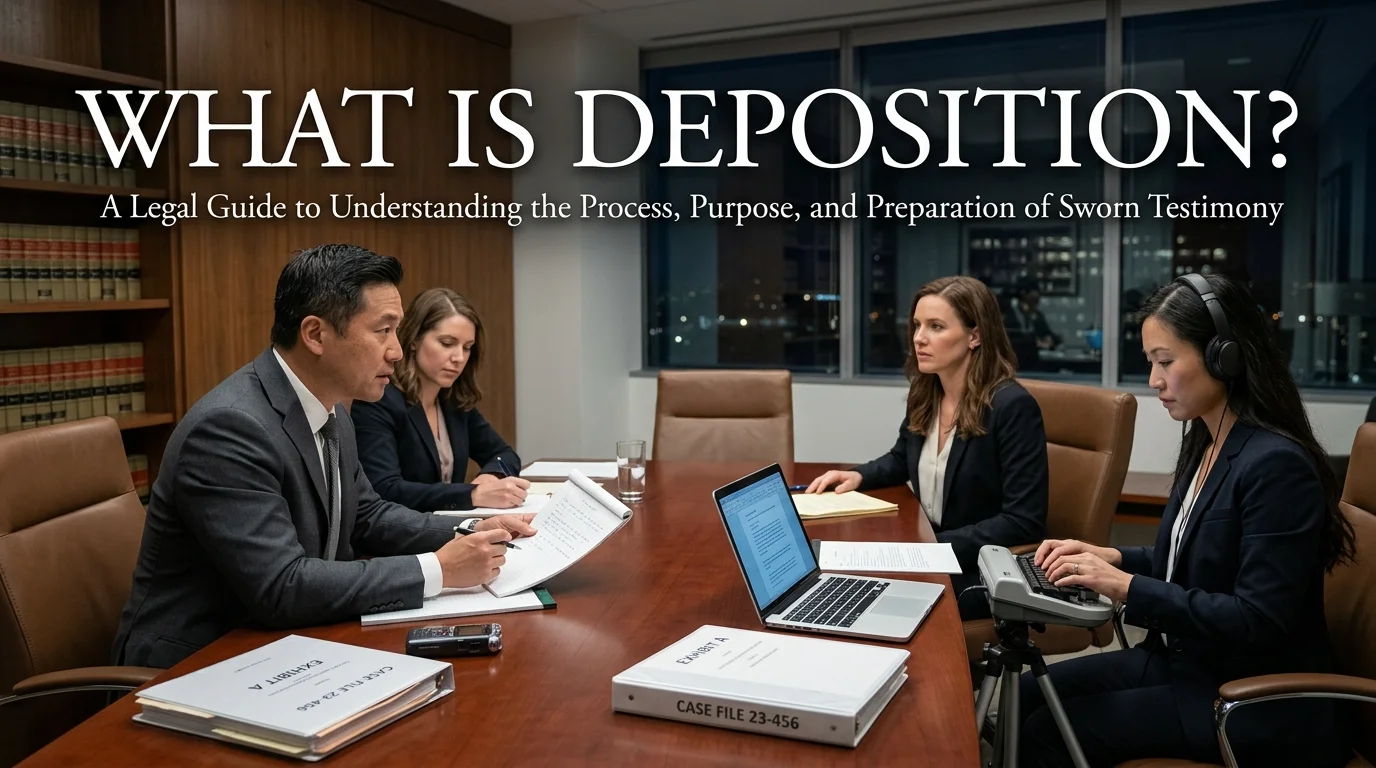
If you’re asking what is deposition in a legal case, the meaning is straightforward. A deposition is sworn testimony given outside a courtroom, usually during the discovery stage of a lawsuit. A witness answers questions under oath while the testimony is recorded for possible use later in the case. You might also like Reckless Endangerment in the U.S..
Direct answer: A deposition is a formal question-and-answer session in which a witness gives sworn testimony before trial. Attorneys ask questions, and an authorized officer records the answers. The process helps both sides gather facts, understand what witnesses know, preserve testimony, and prepare for settlement discussions, motions, or trial.
| Key point | What it means |
|---|---|
| Main purpose | Gather sworn testimony and facts before trial |
| Person answering | The deponent |
| Questioning | Usually conducted by attorneys |
| Recording | Transcript, audio, video, or another authorized method |
| Judge present | Usually no |
| Federal time rule | Normally one day of seven hours unless changed |
| Later use | May help with discovery, impeachment, motions, or trial |
Key Takeaways
- Testimony is given under oath, even though the questioning normally happens outside a courtroom.
- Lawyers use the session to learn facts and preserve a witness’s answers.
- Objections may be made while questioning continues.
- Federal civil cases generally limit questioning to one day of seven hours unless the parties agree otherwise or a court changes the limit.
- Rules can differ among federal courts, state courts, and other jurisdictions.
What Is Deposition in Legal Terms?
The U.S. Courts glossary defines a deposition as an oral statement made before an officer authorized to administer oaths. It may be used to examine witnesses, obtain information during discovery, or preserve testimony for later use.
The person answering questions is called the deponent. That person may be a plaintiff, defendant, eyewitness, expert, employee, company representative, or another individual with relevant knowledge.
A deposition is part of the discovery process in many civil cases. Discovery allows the parties to obtain information before trial rather than hearing important facts for the first time in court.
Depositions can arise in personal injury claims, business disputes, employment matters, family-law litigation, and other civil cases. For related family Law information, NewsPab’s child custody lawyer guide explains how attorneys may help clients prepare evidence and understand court procedures.
Why Lawyers Take Sworn Testimony Before Trial
A lawyer may question a witness for several reasons:
- To learn what the person saw, heard, did, or knows.
- To clarify facts that appeared in documents or earlier discovery responses.
- To find out how a witness is likely to testify at trial.
- To preserve testimony while events are still relatively fresh.
- To compare later testimony with earlier sworn answers.
- To identify additional documents, people, or evidence that may matter.
The process can also help both sides evaluate the strengths and weaknesses of a case. That information may affect settlement discussions or decisions about motions and trial strategy.
What Happens During a Deposition?
A typical deposition starts with the witness being placed under oath. An attorney then asks questions while an authorized officer records the testimony. The witness’s own attorney may attend. Lawyers representing other parties may also be present. A court reporter commonly creates the official record, while a videographer or interpreter may participate when needed.
A judge usually isn’t present in the room. That does not make the answers informal. The witness is still giving sworn testimony.
Questions depend on the dispute. They may cover:
- Personal or professional background.
- Events connected with the lawsuit.
- Conversations and communications.
- Documents, photographs, records, or contracts.
- Injuries, damages, financial issues, or other disputed facts.
- Earlier written statements or discovery responses.
Attorneys may also show the witness documents, known as exhibits, and ask questions about them.
A Simple Example
Imagine a lawsuit following a traffic collision. The injured driver’s testimony might cover where the vehicles were, what the driver saw, medical treatment, missed work, prior statements, and photographs of the scene.
The opposing lawyer is not simply collecting a story. The lawyer is creating a sworn record that can later be compared with other evidence.
How Long Does a Deposition Take?
There is no universal length for every deposition. For federal civil cases, Federal Rule of Civil Procedure 30, published by Cornell’s Legal Information Institute, limits questioning to one day of seven hours. The parties may agree to an alternative arrangement, and a court may allow additional time when necessary to ensure a fair examination.
A straightforward deposition may finish much sooner. Complex disputes can require more time because they may involve numerous events, documents, experts, or parties. State rules may set different limits. Always check the rules that apply to the court handling the specific case.
Objections, Refusing to Answer, and Witness Rights
Depositions do not operate exactly like casual interviews. Under the federal rule, an attorney can make an objection and have it recorded. In most situations, questioning continues, and the witness answers subject to that objection. Objections must be concise and should not be used to suggest an answer.
A lawyer cannot automatically tell a witness to refuse every difficult question. Federal Rule 30 permits an instruction not to answer only in limited circumstances, including to protect privilege, comply with a court-ordered limitation, or seek an order to terminate or limit improper questioning.
A nonparty witness may also be required to attend through a subpoena. Federal Rule 45 sets forth requirements and protections governing subpoenas.
Because procedures vary by jurisdiction, witnesses should rely on their own lawyers for advice about privileges, objections, protective orders, and local rules.
How a Deposition Transcript Can Be Used Later
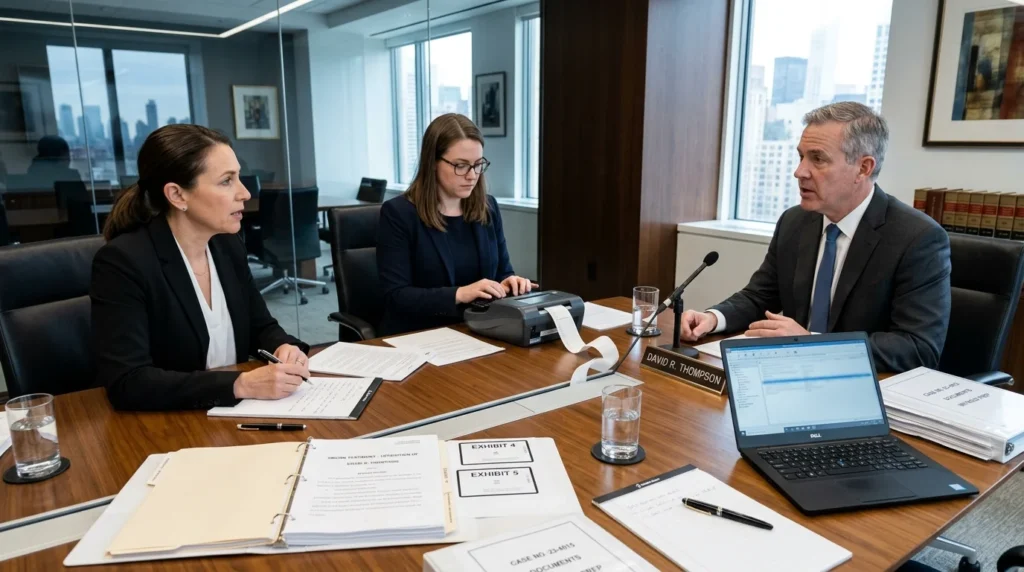
Recorded testimony does not automatically become trial evidence in every situation. Federal Rule 32 sets forth conditions for the use of deposition testimony at hearings or trials. Among other uses, prior testimony may be used to contradict or impeach a witness who later gives inconsistent testimony. The rule also permits broader use in certain situations involving parties or unavailable witnesses.
Federal procedure also provides a transcript-review process. When review is properly requested before questioning ends, the witness generally has 30 days after being notified that the record is available. In that window, the witness may review the transcript and list any changes, along with the reasons for them.
How to Prepare for a Deposition
Preparation should focus on accuracy, not on memorizing a script. Start by speaking with your lawyer about the procedure and the subjects likely to come up. Review relevant documents that your lawyer identifies, especially records you previously created, signed, sent, or received.
During questioning:
- Listen to the entire question.
- Pause long enough to understand it.
- Ask for clarification if the wording is confusing.
- Answer truthfully and directly.
- Don’t guess when you genuinely don’t know or remember.
- Avoid volunteering information that wasn’t requested.
- Correct an answer if you realize you made a genuine mistake.
Preparation advice from legal educators also emphasizes understanding the process before testimony begins rather than arriving without knowing what to expect.
If your matter involves a parenting dispute, organizing timelines, orders, documents, and key questions before meeting with counsel is also a useful model for deposition preparation.
Deposition vs. Courtroom Testimony
| Issue | Pretrial sworn testimony | Courtroom testimony |
|---|---|---|
| Location | Usually outside a courtroom | Courtroom |
| Judge normally present | No | Yes |
| Given under oath | Yes | Yes |
| Main purpose | Discovery and preserving testimony | Presenting evidence to the court or jury |
| Record created | Usually yes | Yes |
| Can affect the case | Yes | Yes |
Both require truthful answers, but they serve different procedural purposes. A deposition mainly helps the parties discover and preserve information before the case reaches a hearing or trial.
What to Do Next
If you’ve received a notice or subpoena, read it carefully and don’t ignore any deadlines. Speak with qualified local counsel if you need advice about your specific case, privilege, documents, attendance requirements, or testimony.
For more general legal content, browse the NewsPab Law section.
Frequently Asked Questions
A deposition is sworn testimony taken outside a courtroom, usually during discovery. It matters because lawyers can obtain facts, preserve answers, assess witnesses, compare later testimony with earlier statements, and prepare their cases before trial.
Usually not. Attorneys conduct most of the questioning while a court reporter or another authorized officer records the testimony.
Not simply because a question is uncomfortable. Under federal civil procedure, instructions not to answer are restricted to particular circumstances, such as protecting privilege or seeking court protection. Local rules may differ.
It may be. Federal Rule 32 allows prior sworn answers to be used in several circumstances, including to challenge inconsistent trial testimony. Admissibility depends on the applicable rules and the facts of the case.
A witness can face questions that affect legal rights or the outcome of a lawsuit. If you are involved in a case, getting advice from a lawyer licensed in the relevant jurisdiction can help you understand the applicable procedures and your obligations.