

Last Updated on September 27, 2026 by alisonhill
If you are asking “am I liable if a kid gets hurt on my property,” the answer is sometimes. Liability usually depends on negligence, the child’s status, the hazard, and any supervision you accepted. State law controls the details, so similar accidents can produce different legal outcomes.
Yes, a homeowner, renter, or occupier can sometimes be liable when a child is injured on the property. Liability often requires proof of negligence or another recognized duty. Children may receive special protection around dangerous conditions, even when they entered without permission.
This article provides general U.S. legal information and does not give legal advice. Premises liability rules vary by state, and local safety laws can also matter. A lawyer licensed in your state can apply those rules to a real incident.
| Key issue | Why it matters |
|---|---|
| Negligence | Liability often turns on whether you used reasonable care. |
| Child’s status | An invited guest and a trespassing child may be treated differently. |
| Attractive nuisance | Some child trespassers receive special protection from dangerous artificial conditions. |
| Supervision | Accepting responsibility for a child can create additional duties. |
| Insurance | Liability and medical-payments coverage may respond differently. |
| State law | Duties, defenses, and damages rules differ across jurisdictions. |
Key takeaways
- An injury on your property does not automatically make you legally responsible.
- Known hazards and foreseeable risks matter more than the property address alone.
- Pools, trampolines, machinery, and similar hazards can raise special child-safety issues.
- A trespassing child may still have a claim under an attractive-nuisance rule.
- Homeowners insurance may provide liability protection or limited no-fault medical payments.
- Document the incident and notify your insurer promptly after a serious injury.
Am I Liable If a Kid Gets Hurt on My Property Under U.S. Law?
A typical claim starts with negligence, not with the simple fact that an injury happened. Negligence generally asks whether you owed a duty and failed to use reasonable care. The claimant must also connect that failure to actual harm.
Courts commonly examine duty, breach, causation, and damages when evaluating negligence claims. Foreseeability often influences whether a precaution was reasonable under the circumstances. NewsPab’s guide to tortious conduct explains how negligence can support civil liability.
What Factors Change the Liability Analysis?
The child’s reason for being on the property can affect the duty you owed. Some states still use visitor categories, while others apply broader reasonable-care standards. Children can also receive protections that do not apply to adult trespassers.
| Factor | Questions a court may examine |
|---|---|
| Permission | Was the child invited, allowed to visit, or trespassing? |
| Hazard | Was there a dangerous condition that created an unreasonable risk? |
| Knowledge | Did you know, or should you have known, about the danger? |
| Foreseeability | Was it predictable that a child could encounter the hazard? |
| Age | Could a child of that age understand the danger? |
| Precautions | Were fencing, locks, warnings, repairs, or supervision reasonable? |
| Causation | Did the alleged failure actually contribute to the injury? |
If the Child Was an Invited Guest
Social guests generally receive more protection than unknown adult trespassers under traditional premises rules. A homeowner may need to warn guests about known, non-obvious dangers. The exact duty depends on the state and the facts.
Suppose a child visits for a birthday party and falls through a broken deck board. Prior complaints, visible deterioration, or delayed repairs could become important evidence. A sudden accident on a sound deck would present a different liability question.
If the Child Was Trespassing
Trespassing usually reduces a landowner’s duties, especially when the trespasser is an adult. Children can be treated differently because they may not understand serious property dangers. The attractive-nuisance doctrine is one important exception in many jurisdictions.
A “No Trespassing” sign may help show that entry was not permitted. It does not necessarily resolve a child-injury claim involving a dangerous condition. Courts may focus on the child’s age, the hazard, and whether trespassing was foreseeable.
If You Agreed to Supervise the Child
Supervision creates a separate issue from the property’s physical condition. A host who undertakes childcare may need to use reasonable care while supervising. The required care depends on the child’s age, activity, and surrounding risks.
A playdate around a pool presents different concerns from quiet indoor play. Courts can also consider whether the child’s parent remained present and supervising. These questions are highly fact-specific and vary by state.
When the Attractive Nuisance Doctrine Can Matter
An attractive nuisance is generally a dangerous property condition that creates special risks for children. The doctrine can impose duties toward some child trespassers despite their lack of permission. It commonly focuses on artificial conditions and risks children may not appreciate.
Some hazards appear repeatedly in child-injury disputes. The details still control whether any feature qualifies. Common examples include the following features.
- swimming pools or hot tubs;
- trampolines and some play structures;
- construction areas, excavations, or scaffolding;
- abandoned vehicles or accessible machinery;
- wells, tunnels, or other dangerous artificial features.
The rule differs by state, and no hazard automatically qualifies everywhere. Courts can examine likely child trespass, serious risk, the child’s understanding, and reasonable prevention costs. A fence, locked gate, cover, repair, or access control may become important evidence.
Common Home Scenarios and Their Liability Risks
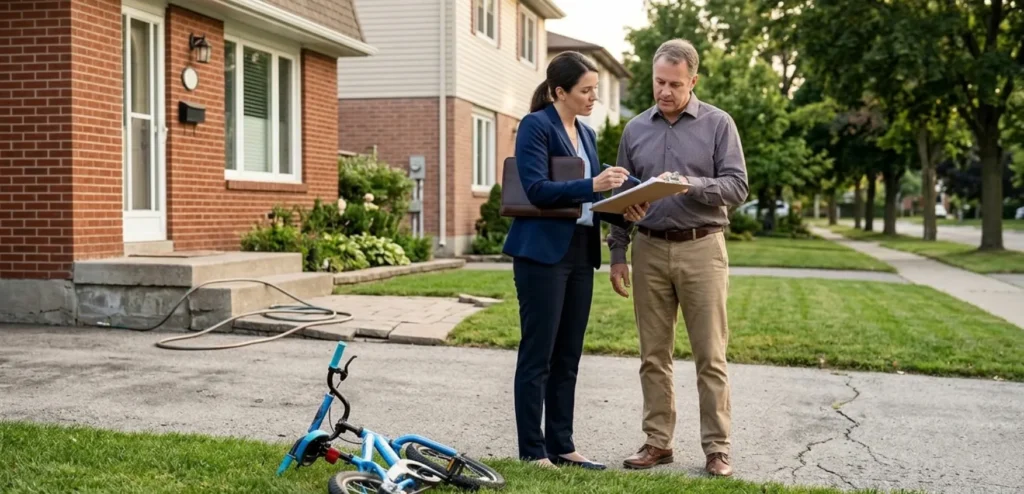
A practical review starts with the hazard and the precautions already in place. The table below shows issues that often deserve closer attention. It does not predict liability in any specific case.
| Scenario | Issues that may matter |
|---|---|
| Backyard pool | Fencing, gate locks, covers, alarms, supervision, and local pool rules |
| Trampoline | Access control, equipment condition, supervision, and known misuse |
| Playset | Loose hardware, fall surfaces, broken parts, and age suitability |
| Stairs or deck | Broken rails, rotten boards, lighting, and warnings |
| Tools or machinery | Locked storage, disabled equipment, and child access |
| Construction project | Open pits, ladders, debris, barriers, and contractor control |
| Dog incident | State animal-liability rules, prior behavior, restraints, and warnings |
The strongest prevention steps usually address hazards before a child can reach them. Reasonable precautions also create useful evidence if an accident still occurs. The American Bar Association advises barriers and liability insurance around child-attracting hazards.
Does Homeowners Insurance Cover a Child’s Injury?
Homeowners insurance often includes personal liability coverage for covered claims against the insured. That coverage can help with defense costs and covered awards up to policy limits. Exclusions, conditions, and coverage limits still control the insurer’s obligations.
Many policies also include medical-payments coverage for certain injured non-household visitors. This coverage can pay limited medical expenses without first proving legal fault. Because it differs from liability coverage, both sections of the policy deserve review.
What Should You Do After a Child Is Hurt?
The first priority is the child’s safety and appropriate medical care. After you address urgent needs, preserve accurate information about what happened. Do not alter evidence simply to make the scene look better before documenting it.
- Call emergency services if the injury may be serious.
- Notify the child’s parent or guardian immediately.
- Photograph the area, hazard, barriers, and relevant equipment.
- Save security footage, messages, repair records, and witness names.
- Report the incident to your insurer as required by the policy.
- Speak with a local attorney before giving detailed statements in a disputed serious claim.
Good records can clarify whether a dangerous condition existed before the accident. They can also show repairs, warnings, supervision arrangements, or earlier complaints. NewsPab’s deposition guide explains why preserved facts can matter if a civil case develops.
What If You Rent the Property?
A renter can sometimes face liability even without owning the property. Responsibility may depend on who controlled the area and who handled the dangerous condition. A landlord may have separate duties for structural problems or common areas.
Read the lease provisions covering maintenance, repairs, insurance, and use of the property. NewsPab’s guide to lessee rights and responsibilities explains why those allocations matter. State landlord-tenant law can also create duties beyond the written lease.
Can a Parent’s Supervision Affect the Claim?
Another adult’s conduct can matter when several people contributed to an accident. State fault rules determine whether shared responsibility reduces or changes recoverable damages. Rules involving a child’s own conduct may also depend on age and capacity.
Do not assume a parent’s presence automatically eliminates a homeowner’s responsibility. Courts may separate property hazards from supervision duties and examine each alleged cause. A local lawyer can identify which fault rules apply in the relevant state.
Frequently Asked Questions
Am I liable if a kid gets hurt on my property?
Not automatically, because an injury alone does not prove negligence. Liability usually requires a legal duty, a breach, causation, and compensable harm. Special rules can apply to children, supervision, and dangerous property conditions.
Can I be liable if the child was trespassing?
Yes, in some circumstances, especially when a child encounters a qualifying attractive nuisance. The doctrine can create duties that would not apply to an adult trespasser. The exact elements and covered hazards vary by state.
Does a warning sign protect me from liability?
A warning can be useful, but it is not a universal shield. Young children may be unable to read or understand a warning. Physical barriers or hazard removal may matter more for serious child-attracting risks.
Will homeowners insurance always pay the claim?
No, because coverage depends on the policy, the allegations, exclusions, and applicable limits. Medical-payments coverage can also work differently from personal liability coverage. Report the incident promptly and ask your insurer to explain the coverage.
Should I speak with a lawyer after a serious child injury?
Legal advice is sensible when injuries are serious, fault is disputed, or a claim has been threatened. A lawyer can review state premises rules, insurance issues, and evidence-preservation duties. NewsPab’s Law section provides general background, but it cannot replace case-specific legal advice.
The Practical Takeaway for Property Owners
Child injury liability usually turns on reasonable care, foreseeability, supervision, and the specific hazard involved. Pools, trampolines, machinery, and similar features deserve strong barriers and regular safety checks. Insurance should be reviewed before an accident, not after a claim exposes a coverage gap.
If a serious injury has already happened, protect the child and preserve the facts. Notify your insurer and avoid making unsupported promises about fault or payment. For a real dispute, consult a lawyer licensed in the state where the injury occurred.

