Last Updated on September 25, 2026 by alisonhill
Paul Castellano led the Gambino crime family from 1976 until his killing in Manhattan in 1985. He favored business-oriented rackets and a quieter public profile than the boss who followed him. His murder outside Sparks Steak House cleared the way for John Gotti’s rise.
Castellano was a Brooklyn-born organized-crime leader who succeeded Carlo Gambino as boss of the Gambino family in 1976. Federal scrutiny and internal resentment weakened his position during the 1980s. On December 16, 1985, gunmen killed him and underboss Thomas Bilotti outside Sparks Steak House in Manhattan.
| Key fact | Detail |
|---|---|
| Name | Paul Castellano |
| Full name | Constantino Paul Castellano |
| Born | June 26, 1915, New York City |
| Died | December 16, 1985, New York City |
| Age at death | 70 |
| Organization | Gambino crime family |
| Became boss | 1976 |
| Predecessor | Carlo Gambino |
| Successor | John Gotti |
| Wife | Nina Manno |
| Children | Four |
| Place of death | Outside Sparks Steak House, Manhattan |
Key Takeaways
- Castellano succeeded Carlo Gambino after Gambino died in 1976.
- His leadership emphasized construction, trucking, meat distribution, and other business-linked operations.
- His promotion caused resentment among supporters of underboss Aniello “Neil” Dellacroce.
- Federal investigations placed growing legal pressure on the Gambino leadership during 1985.
- John Gotti and allies organized the December 1985 assassination.
- The killing allowed Gotti to take control of the Gambino family.
- Gotti was convicted in 1992 on charges that included the murders of Castellano and Bilotti.
Who Was Paul Castellano?
Castellano was born in Brooklyn on June 26, 1915, to a family with Sicilian roots. His relatives included Carlo Gambino, who later became a major New York Mafia leader. Gambino was both his cousin and brother-in-law.
He developed a reputation for approaching organized crime with a strong business focus. The Mob Museum describes interests involving construction, meat distribution, trucking, and union-related operations. That approach distinguished him from figures whose reputations depended more heavily on street activity. His name still surfaces regularly in films and television about the Mafia, a subject covered in NewsPab’s Entertainment section.
Early Life and His Path Into the Gambino Family
Castellano grew up around relatives connected to New York’s developing Italian-American organized-crime networks. His father worked as a butcher, and Castellano also learned the meat business. Those commercial skills later became part of his public and criminal reputation.
His family connection to Gambino helped place him near powerful figures inside the organization. Still, family ties alone did not explain his eventual position. He became known as an important earner and administrator within the organization.
How Castellano Became Gambino Crime Family Boss
Carlo Gambino died in October 1976 after nearly two decades leading the organization bearing his name. Before his death, Gambino selected Castellano to succeed him. The decision bypassed underboss Aniello Dellacroce, who commanded considerable loyalty among street-level members.
This leadership arrangement created a major divide within the family. Castellano controlled the organization while Dellacroce retained influence over several crews. This compromise contained tensions for years, but it did not remove them.
A Business-Focused Leadership Style
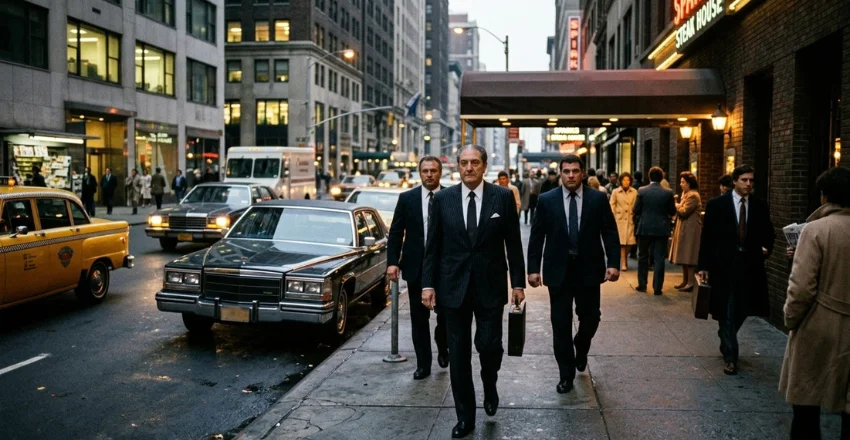
Castellano sought profits from operations that overlapped with legitimate industries and commercial enterprises. Construction, meat distribution, and trucking became important parts of his economic base. His style earned him a reputation as a more corporate-minded Mafia leader.
This approach did not mean street rackets disappeared from the Gambino organization. Gambling, loansharking, theft, extortion, and labor-related schemes remained part of federal organized-crime investigations. The difference involved how the boss preferred to manage and profit from the organization.
Why John Gotti and Castellano Came Into Conflict
John Gotti belonged to a Gambino faction closely associated with Dellacroce. Gotti and several associates engaged in activities that increased federal scrutiny in the early 1980s. Drug-trafficking allegations created particular danger because Castellano opposed narcotics activity within the organization.
Surveillance evidence involving Angelo Ruggiero and other Gotti associates deepened the dispute. The tapes reportedly included drug discussions and damaging comments about the boss. Dellacroce helped contain the conflict while he remained alive.
Dellacroce died from cancer on December 2, 1985. His death removed an important buffer between the two factions. The dispute quickly moved toward a violent struggle for control.
Federal Pressure Was Also Growing in 1985
The internal conflict developed as federal prosecutors attacked New York Mafia leadership through racketeering cases. In February 1985, Castellano was among leaders charged in the federal Mafia Commission case. A superseding indictment followed that June, adding allegations against several defendants.
He also faced a separate federal trial involving an alleged stolen-car operation when he was killed. Contemporary reporting described a case involving vehicles shipped overseas for resale. His legal problems therefore added another source of uncertainty around the organization’s leadership.
The Murder Outside Sparks Steak House
On December 16, 1985, Castellano traveled to Sparks Steak House in Midtown Manhattan with Thomas Bilotti. Gunmen attacked as the two men arrived outside the restaurant. Both were killed in one of New York’s most widely remembered organized-crime assassinations.
Later testimony helped establish how the killing had been organized. Salvatore “Sammy the Bull” Gravano testified that he and Gotti watched events from a nearby car. The FBI states that Gotti had the assassination carried out before taking control of the family.
The attack occurred during a busy December evening in Manhattan. Its public setting made the crime unusually conspicuous for a leadership change. That visibility also tied Gotti’s future reputation closely to the killing.
What Happened After the Assassination?
Gotti emerged as the new Gambino boss after the killing. His public style contrasted sharply with the quieter image associated with his predecessor. Media attention soon made him one of America’s most recognizable organized-crime figures.
Federal investigators continued building cases against Gotti and his associates. Gravano eventually became a cooperating government witness and testified about the 1985 murders. In April 1992, a jury convicted Gotti on 13 counts, including the killings of Castellano and Bilotti.
Family, Marriage, and the Staten Island Mansion
According to published biographical records, Castellano married Nina Manno in 1937. The couple had three sons and one daughter. Nina survived her husband and died in 1999.
His Todt Hill residence on Staten Island became another symbol associated with his wealth and status. The large property was commissioned during the 1970s and later attracted considerable media attention. Its scale reinforced perceptions that the boss had become distant from street-level members.
Estimates of his personal net worth vary widely and should be treated cautiously. Criminal proceeds rarely produce reliable public accounting records or conventional financial disclosures. For that reason, precise online net-worth figures are better viewed as estimates rather than documented totals.
Why His Death Mattered to the American Mafia
The assassination represented more than a change of leadership inside one crime family. It showed that an internal faction could remove a sitting New York boss without a traditional transition. Gotti’s takeover then pushed the Gambino organization into a far more public era.
Federal authorities were already using RICO prosecutions and electronic surveillance against organized-crime leaders. Gotti’s later conviction demonstrated how cooperating witnesses could strengthen those cases. Castellano’s death therefore sits between two distinct periods of Gambino leadership.
Paul Castellano FAQ
Why was Paul Castellano killed?
The murder grew from several conflicts within the Gambino organization. Gotti’s faction feared consequences from drug-related evidence and resented the existing leadership structure. Dellacroce’s death removed a key mediator shortly before the assassination.
How old was Castellano when he died?
Castellano was 70 years old when he was killed. He was born on June 26, 1915, and died on December 16, 1985. Contemporary reporting also identified him as 70 immediately after the shooting.
Was Castellano related to Carlo Gambino?
Yes, the two men were related through multiple family connections. Gambino was his cousin and also became his brother-in-law. Their relationship preceded Gambino’s decision to name him as successor.
Who was killed with Castellano?
Thomas Bilotti was killed during the same attack outside Sparks Steak House. Bilotti was a senior Gambino figure and had recently become underboss. His death removed another important member of the existing leadership.
Where is Castellano buried?
Published biographical records place his burial at Moravian Cemetery on Staten Island. The cemetery is located in New Dorp, New York. His grave remains part of the historical record surrounding his life and death.
The Lasting Historical Picture
Paul Castellano remains closely associated with the transition between Carlo Gambino’s era and John Gotti’s highly public leadership. His story also shows how business interests, internal loyalties, and federal pressure intersected within organized crime. The December 1985 assassination made those tensions visible on a Manhattan street.
Readers interested in crime-drama personalities can also see the Jamie Hector profile. NewsPab publishes broader biographical pieces too, including its John Teets profile.