Last Updated on September 22, 2026 by henryriley
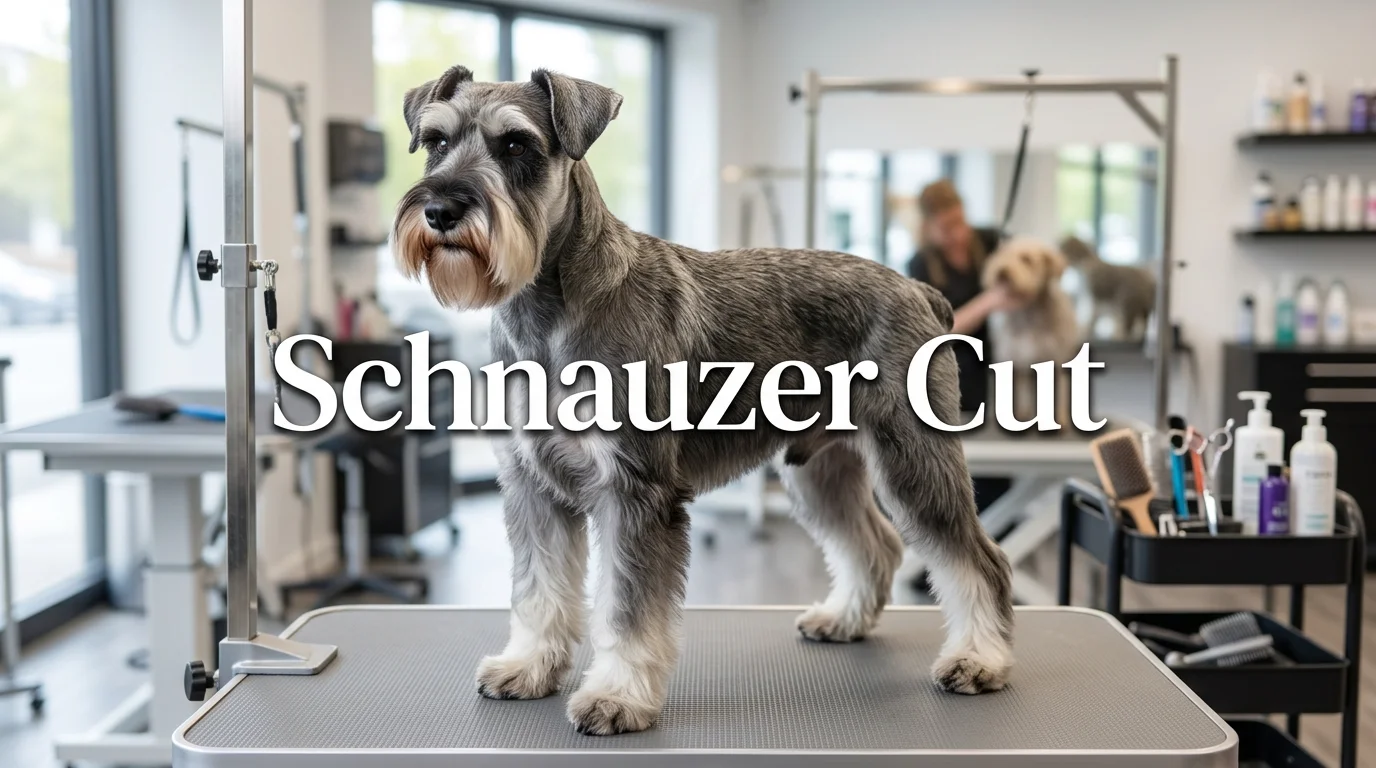
A schnauzer cut keeps the body neat while preserving the breed’s expressive beard, eyebrows, and leg furnishings. Most pet owners choose clipping for convenience, while show coats are traditionally hand-stripped. The right style depends on coat texture, brushing time, activity, and the look you prefer.
| Style | Main look | Upkeep | Good fit for |
|---|---|---|---|
| Traditional trim | Short body, full beard, brows, and furnishings | Moderate to high | Owners who want the classic outline |
| Modified pet trim | Classic outline with shorter furnishings | Moderate | Busy households |
| Puppy cut | Even, soft length over most of the coat | Lower | Easy everyday maintenance |
| Teddy bear cut | Rounded face and plush finish | Moderate | Owners who prefer a softer look |
| Summer cut | Shorter body and reduced furnishings | Lower | Active dogs and easier cleanup |
| Short-beard pet trim | Breed outline with a tidier muzzle | Lower | Messy drinkers or food-prone beards |
| Hand-stripped show pattern | Harsh jacket with sculpted furnishings | High | Show presentation and wire-coat preservation |
A classic breed trim uses a short jacket with longer hair on the beard, eyebrows, legs, and underline. Pet versions can shorten those furnishings for easier care. Hand-stripping preserves a harsher wire texture, while clipping offers simpler maintenance for many family dogs.
Key Takeaways
- Choose the cut around your brushing routine, not appearance alone.
- Clipping is practical for pets, while hand-stripping preserves the harsher outer coat.
- Longer beards and leg furnishings need the most between-appointment care.
- Many pet dogs benefit from professional grooming about every six to eight weeks.
- Bring a reference photo and describe the length you want before the groom starts.
What Defines a Schnauzer Cut?
The classic outline combines a close body jacket with longer hair over the eyes, muzzle, and legs. The AKC breed standard describes arched eyebrows, bristly whiskers, and longer leg furnishings. Those features create the square, sharp silhouette owners usually recognize.
The coat itself has two layers, with a wiry outer coat over a softer undercoat. That structure explains why technique matters as much as length. The American breed club notes that clipping is common for pet trims, while stripping maintains the wire coat.
7 Popular Schnauzer Haircut Styles
Current grooming guides show several recognizable variations built from the same basic outline. The biggest differences involve body length, face shape, and how much furnishing stays on the legs. Your weekly brushing tolerance should narrow the choices quickly.
1. Traditional or Classic Trim
The traditional style keeps the back and sides short while leaving the beard, brows, and legs noticeably fuller. It produces the familiar Schnauzer silhouette seen in breed standards and show grooming. It also asks more from owners because longer furnishings collect tangles, moisture, and debris.
2. Modified Pet Trim
This version keeps the recognizable outline but shortens the skirt, leg hair, beard, and brows. It usually looks polished without requiring the same brushing commitment as fuller styles. Ask for this option when you want breed character with easier daily care.
3. Puppy Cut
A puppy cut uses a more even length across the body and furnishings. The finish looks softer and less angular than the traditional pattern. It suits owners who value simple upkeep and a uniform grow-out between appointments.
4. Teddy Bear Cut
The teddy bear variation favors a rounded muzzle, softer eyebrows, and plush legs. It trades the sharper terrier-like outline for a gentler face. Regular combing still matters because the fuller finish can hide small tangles near the skin.
5. Summer or Kennel Cut
A summer trim reduces coat length and usually shortens the furnishings for easier cleaning. It can work well for active dogs that collect mud, burrs, or grass. Discuss extremely short lengths with an experienced groomer before committing to a close shave.
6. Short-Beard Pet Trim
This practical variation keeps the body pattern while shortening the beard around the mouth. A shorter muzzle can make food and water cleanup easier. It suits owners who like the breed outline but dislike a damp, messy beard.
7. Hand-Stripped Show Pattern
Hand-stripping removes dead outer hairs rather than cutting them across with clippers. The method helps preserve the hard texture valued in conformation presentation. It takes more skill and time, so experienced groomers are especially useful for this finish.
Hand-Stripping vs. Clipping: What Changes?
Hand-stripping removes mature outer hairs so new wire hairs can replace them. Clipping cuts the coat to length and is faster for routine pet maintenance. Repeated clipping can soften the outer coat, which matters more to show owners than most pet families.
Choose technique before focusing on blade length or facial style. If coat texture matters, discuss stripping before the first full clip. If convenience matters more, a clipped pet pattern can still look neat and breed-appropriate.
How Often Should the Coat Be Groomed?
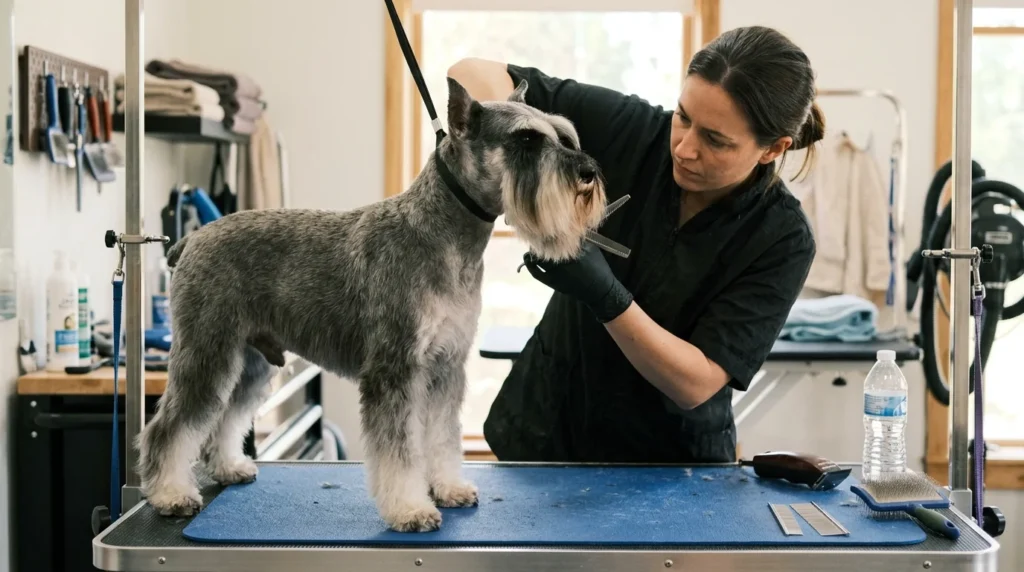
PetMD recommends professional grooming for Miniature Schnauzers at least every eight weeks, with regular brushing between visits. Many grooming sources recommend a six-to-eight-week schedule to maintain a crisp pet trim. Your dog may need earlier attention when furnishings mat, block vision, or become difficult to clean.
At home, focus on the beard, legs, underarms, belly, and areas around the feet. Brush before mats tighten, then check the coat with a metal comb. Clean damp facial hair promptly, and contact your veterinarian if you notice persistent skin redness or sores.
- Brush and comb the furnishings at least weekly, and more often for fuller coats.
- Wipe or rinse the beard when food or moisture collects around the mouth.
- Check the eyes so overgrown brows or loose hairs do not interfere with vision.
- Keep nails, paw hair, and sanitary areas on a regular maintenance schedule.
How to Ask a Groomer for the Look You Want
A groomer hears the phrase Schnauzer trim often, but owners can picture different lengths. Bring one or two clear photos that show the face, legs, and side profile. Then describe what you want shortened and what you want left full.
- State whether you want clipping or hand-stripping before discussing style details.
- Choose a body length and explain whether you prefer a close or softer jacket.
- Say how full you want the eyebrows, beard, leg hair, and belly furnishings.
- Mention matting, sensitive areas, skin concerns, or previous grooming problems.
- Ask what home brushing schedule matches the finished length.
Good communication also prevents surprises when mats require a shorter finish. Ask the groomer to explain any coat change before removing more length than planned. For broader pet-care reading, browse the NewsPab Pets section after your grooming appointment.
Can You Maintain the Cut at Home?
Routine brushing, beard cleaning, paw checks, and light combing are realistic for most owners. Full-body clipping and facial scissoring require steadier handling and the right tools. PetMD warns that hot blades and sharp scissors can cause injuries during inexperienced home grooming.
Start with maintenance tasks your dog already tolerates calmly. Leave difficult mats, moving facial areas, and close clipper work to an experienced professional. If skin irritation appears, a veterinary visit is safer than trying to solve the problem with a shorter haircut.
NewsPab also covers veterinary settings in its animal hospital culture article. That piece is not a grooming guide, but it can help pet owners think about care environments. You can also browse the NewsPab Health section for broader health topics.
Does the Same Style Work for Every Size?
Miniature, Standard, and Giant Schnauzers share the recognizable beard-and-brow look, but their grooming workload differs. Larger dogs simply present more coat area and longer grooming sessions. Coat condition, activity, age, and owner preference matter more than choosing one universal length.
For any size, start with comfort and coat condition before copying a photo exactly. A heavily matted dog may need a shorter reset than the picture shows. A healthy, maintained coat gives the groomer more styling choices at the next visit.
Frequently Asked Questions
What is a schnauzer cut supposed to look like?
It usually has a shorter body with longer eyebrows, beard, leg furnishings, and a shaped underline. Pet versions may shorten those features while keeping the same general outline. The exact length can vary without losing the recognizable breed look.
Is a puppy cut easier to maintain than the traditional trim?
Usually, because the coat is kept more even and the furnishings are less dramatic. Shorter leg and belly hair generally collect fewer tangles and outdoor debris. You still need brushing, face cleaning, nail care, and scheduled trims.
Is hand-stripping better than clipping?
Hand-stripping is better for preserving a harsh wire texture and show-style coat. Clipping is easier and more widely used for companion dogs. The better choice depends on your goals, budget, available groomer, and willingness to maintain the coat.
How often should I book a professional groom?
A six-to-eight-week rhythm works for many pet trims, though coat growth varies. Longer furnishings may need earlier shaping if they mat or block the eyes. Ask your groomer to set the next interval after seeing how your dog’s coat grows.
Choose a Style You Can Maintain
A well-chosen schnauzer cut should look good on grooming day and remain manageable afterward. Match the style to your brushing time, coat goals, and how much facial hair you want to clean. Consistent maintenance usually matters more than chasing the most dramatic finish.
Bring reference photos, explain your priorities, and ask how the chosen style should grow out. Keep the beard and furnishings clean between appointments, and address mats before they tighten. That routine gives your groomer more options and keeps the coat easier to manage.