Last Updated on September 23, 2026 by alisonhill
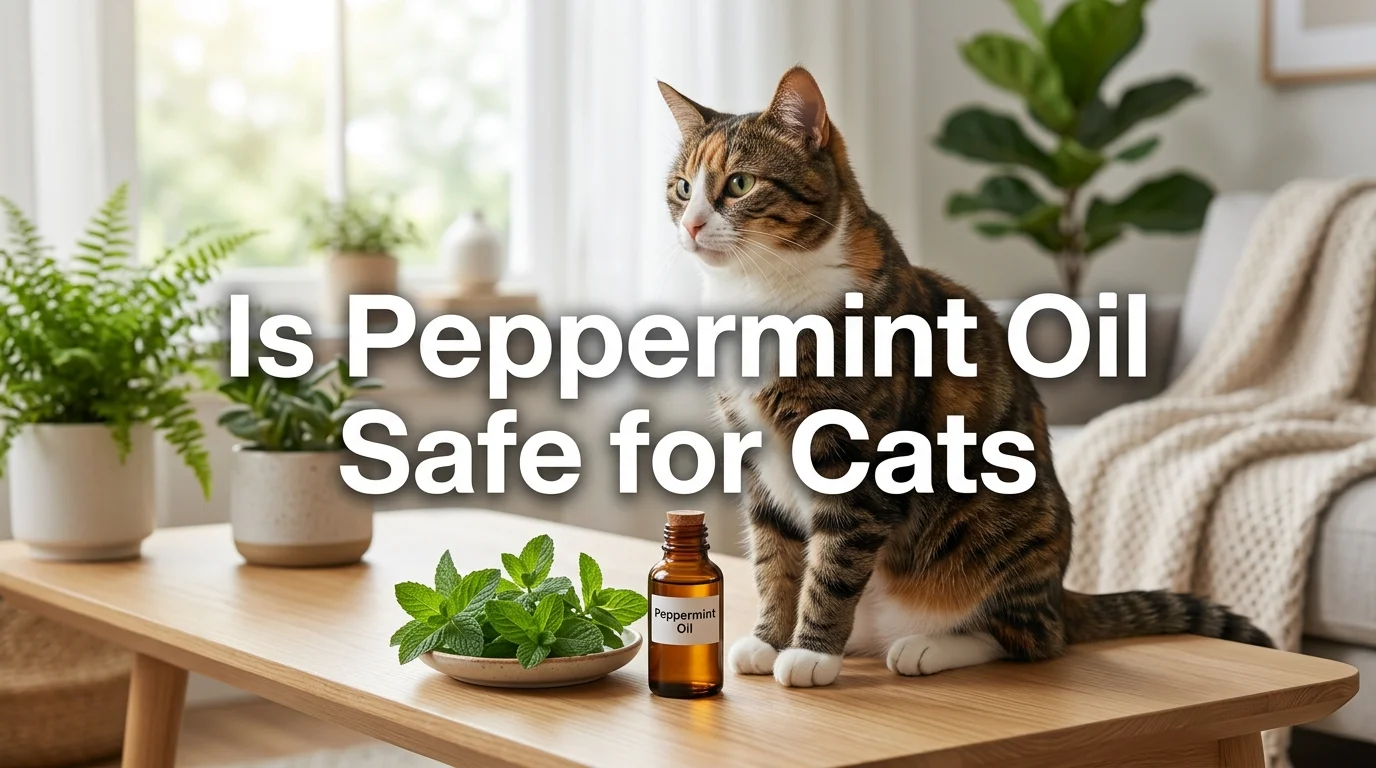
If you’re asking, “is peppermint oil safe for cats,” the short answer is no. Cornell University College of Veterinary Medicine lists peppermint oil, menthol included, as toxic to cats in its small animal toxins guidance. Exposure can happen through swallowing, skin contact, or inhaling concentrated droplets.
| Question | Practical answer |
|---|---|
| Direct use on a cat | Avoid it unless a veterinarian specifically directs otherwise. |
| Swallowing or licking | Potentially toxic and worth prompt professional advice. |
| Skin or fur contact | Can be absorbed and later swallowed during grooming. |
| Diffusers | Risk depends on device, concentration, ventilation, and access. |
| Flea treatment | Homemade essential-oil treatments are not recommended. |
| Emergency help in the U.S. | Call your veterinarian, ASPCA Poison Control, or Pet Poison Helpline. |
Peppermint essential oil is not considered safe for direct exposure in cats. Veterinary sources warn about ingestion, skin contact, and inhalation risks. Keep concentrated products away from cats, avoid homemade treatments, and contact a veterinarian or poison service promptly after meaningful exposure.
Key Takeaways
- Cornell University lists peppermint oil, including menthol, as toxic to cats.
- Pet Poison Helpline says cats absorb essential oils through the mouth and skin.
- Active diffusers can release microdroplets that settle on fur and surfaces.
- Warning signs include drooling, vomiting, weakness, tremors, wobbliness, and breathing trouble.
- Do not induce vomiting unless a veterinary professional tells you to.
- For fleas, use a cat-labeled product your veterinarian recommends.
Why Cats Are More Vulnerable to Essential Oils
Cats process many plant compounds differently from people and some other animals, because they lack much of the liver enzyme activity that breaks down phenols. Pet Poison Helpline notes that cats have a limited ability to metabolize certain essential-oil compounds. Higher concentrations create more concern because the body must handle a larger chemical dose.
Exposure also becomes complicated because cats groom themselves so thoroughly. Oil on a paw or coat can become an oral exposure during grooming. Toxicology guidance notes that skin absorption and later grooming can both increase exposure.
Is Peppermint Oil Safe for Cats Around Diffusers?
A diffuser does not automatically create the same exposure as drinking the oil. Passive devices mainly release fragrance, while active devices can release tiny oil droplets. Pet Poison Helpline warns that those droplets may settle on fur and later be swallowed.
The ASPCA gives more nuanced advice about short diffuser use in a secured room. It says brief use away from pets is not likely to cause problems. Because this oil is specifically listed as toxic, avoiding cat exposure remains the safer household choice.
How Exposure Happens and Which Symptoms Matter
Common exposure routes include licking a spill, walking through oil, or contacting a leaking diffuser. A cat may also inhale vapor or aerosol in a poorly ventilated space. The product concentration, amount, route, and the cat’s health can change the risk, and our Health section covers other household exposures worth watching for.
Symptoms can affect the digestive, nervous, respiratory, and skin systems. Pet Poison Helpline describes several signs that deserve prompt attention. Severe cases can involve breathing problems, neurological changes, or liver injury.
- Drooling or pawing at the mouth.
- Vomiting.
- Weakness or unusual sleepiness.
- Wobbliness or trouble walking.
- Muscle tremors.
- Red or irritated skin, lips, or gums.
- Difficulty breathing.
- Unusual behavior or reduced responsiveness.
What to Do After a Suspected Exposure
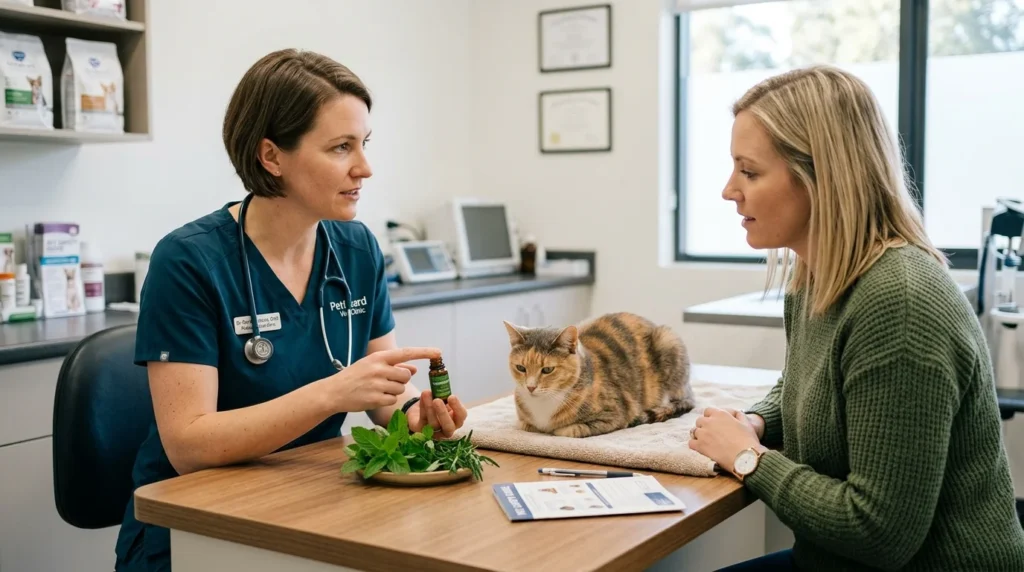
Move your cat away from the source and check breathing and behavior. Call your veterinarian or a poison service for guidance, even if symptoms seem mild. Early advice can help determine whether home monitoring or urgent treatment is appropriate.
- Remove the oil, diffuser, or contaminated item from your cat’s reach.
- Move the cat to fresh air if inhalation may have occurred.
- Prevent grooming if oil is visible on the fur.
- Wash contaminated fur with liquid dishwashing soap when prompt decontamination is appropriate.
- Do not induce vomiting or give a home antidote without veterinary direction.
- Keep the bottle, label, concentration, and estimated exposure amount available.
The ASPCA recommends liquid dishwashing soap for greasy substances, including essential oils. Pet Poison Helpline warns against inducing vomiting without professional guidance. If your cat has breathing trouble, tremors, collapse, or marked weakness, seek emergency veterinary care.
Does Dilution Make the Oil Safe?
Dilution lowers concentration, but it does not create a proven safe dose for cats. The American College of Veterinary Pharmacists says no toxicity threshold has been established. That makes homemade dilution recipes a poor basis for deciding what is safe.
A commercial product labeled for cats is a different situation from a homemade mixture. Its formulation, concentration, directions, and intended use can differ substantially. Use cat-labeled products exactly as directed, and ask your veterinarian when ingredients raise questions.
What About Peppermint Plants, Sprays, and Flea Remedies?
The peppermint plant is not identical to concentrated essential oil. The ASPCA Animal Poison Control plant database lists mint species as toxic to cats, naming their essential oils as the toxic principle. Large plant ingestions can cause vomiting or diarrhea, so access still deserves attention.
Homemade flea sprays are also a concern because they combine exposure with uncertain effectiveness. University of Minnesota Extension does not recommend essential oils for flea control. It cites limited effectiveness data and concerns about harm after pets ingest these oils.
For flea prevention, choose a product specifically labeled for cats and your cat’s age. Never apply a dog flea product unless your veterinarian confirms it is cat-safe. Some dog products contain permethrin, which Cornell lists as toxic to cats.
Safer Household Choices for Cat Owners
If you want a fresh-smelling home, ventilation and source removal are lower-risk starting points. Clean spills promptly, store concentrated oils in closed cabinets, and keep diffusers where pets cannot reach them. Cats with asthma or other breathing problems may be especially sensitive to strong airborne fragrances.
For behavior or stress support, ask your veterinarian about feline pheromone products instead. These products do not remove the need to investigate medical causes of behavior changes. Your veterinarian can help match the product to your cat and household.
For context on veterinary workplaces, see the article about animal hospital culture. Medical and pet-safety content should still be used alongside professional veterinary advice.
Frequently Asked Questions
Is peppermint oil safe for cats if they only smell it?
Smelling a faint odor is different from direct contact with concentrated oil. Strong vapor can irritate airways, and active diffusers may release droplets that settle on fur. Move the cat away if it coughs, drools, shows breathing changes, or acts unusually.
Can I use a peppermint diffuser in a home with cats?
The lowest-risk approach is to avoid exposing cats to this specific oil. ASPCA guidance says brief diffuser use in a secured, inaccessible room is not likely to cause harm. Active diffusers deserve extra caution because they can aerosolize oil droplets.
What if my cat licked one drop?
Do not assume a small amount is harmless because products vary in concentration. Call your veterinarian or a poison service with the product label and estimated amount. Do not induce vomiting unless a professional gives that instruction.
Can I put diluted mint oil on my cat for fleas?
Homemade essential-oil flea treatments are not a dependable safety choice for cats. Evidence for effectiveness is limited, while toxic exposure remains possible through skin and grooming. Ask your veterinarian for a cat-labeled flea preventive instead.
Is fresh mint safer than the essential oil?
Fresh plant material is far less concentrated than an essential-oil bottle. The ASPCA still lists mint species as toxic to cats because of their natural oils. Large plant ingestions can cause vomiting or diarrhea, so keep the plant away from cats that chew greenery.
When to Get Help in the United States
Call your veterinarian promptly after a meaningful exposure or when symptoms appear. ASPCA Animal Poison Control is available at 888-426-4435, and Pet Poison Helpline is available at 855-764-7661. Fees may apply, and both services can help with exposure-specific triage.
Keep the product container nearby when you call because the exact ingredients matter. Tell the professional how exposure happened, when it occurred, and what signs you see. For publishing context, NewsPab also provides a general information disclaimer covering site content.
The practical takeaway is simple: keep concentrated mint oils away from cats. Do not use homemade topical or flea remedies on your pet. This article doesn’t replace veterinary care, so seek prompt help after exposure or symptoms.