Last Updated on September 20, 2026 by henryriley
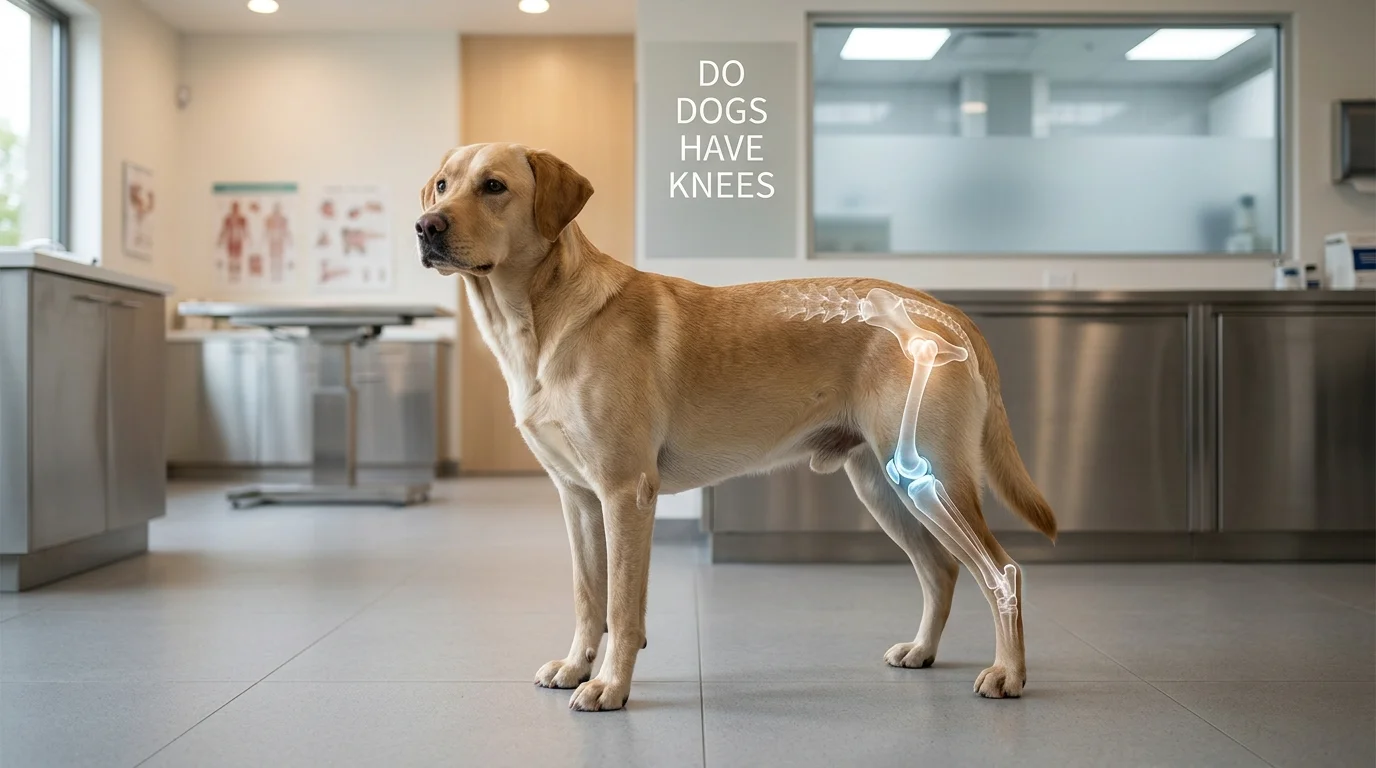
If you have wondered “do dogs have knees,” the answer is yes. Canines have two knees, one on each hind leg. Veterinarians call each knee a stifle, and its structure closely resembles a human knee.
Yes, dogs have two true knees, one on each hind leg. Each knee is called a stifle and contains a patella, or kneecap. The joint that points backward lower on the rear leg is the hock, comparable to the human ankle.
Canine Knee Anatomy at a Glance
| Question | Quick answer |
|---|---|
| Number of true knees | Two |
| Veterinary name for the knee | Stifle |
| Location | Hind legs |
| Kneecap | Patella |
| Lower backward-pointing rear joint | Hock or tarsus |
| Front-leg counterparts | Elbow and carpus |
| Important internal ligament | Cranial cruciate ligament |
| Common concerns | CrCL disease, patellar luxation, osteoarthritis |
Key Takeaways
- A canine has two knees, not four.
- The true knee is the stifle on each hind limb.
- The hock is comparable to a human ankle.
- Front limbs contain elbows rather than knees.
- Each stifle includes a patella, ligaments, cartilage, and menisci.
- Limping or repeated skipping can signal a joint problem.
Do Dogs Have Knees? The Short Anatomical Answer
A canine has two stifle joints, one in each hind limb. The stifle sits between the femur and tibia. It also includes the patella and several stabilizing ligaments.
Front limbs have elbows instead of knees. Lower front joints are called carpi, similar to human wrists. Lower rear joints are hocks, or tarsi, which function more like ankles.
Where Are a Dog’s Knees Located?
Start at the rear paw and move upward along the leg. The first prominent bend is the hock, not the knee. Continue upward until you reach the joint beneath the thigh muscles.
That upper joint is the stifle. It bends forward as the leg flexes, although fur can hide its outline. The kneecap sits at the front and may feel like a small bump.
Why Do the Back Legs Look Like They Bend Backward?
Canines are digitigrade, which means they walk mainly on their toes. Their heels stay raised off the ground when they stand normally. That elevated heel position makes the hock look like a backward knee.
The hock is not an extra knee. It contains tarsal bones and sits below the tibia. Thinking of it as an ankle makes the rear-leg shape easier to understand.
A Simple Way to Identify the Knee Safely
Watch your pet from the side while they stand naturally. Find the rear paw, then follow the limb upward. The low backward-pointing bend is the hock.
Keep moving upward toward the body until you reach the next major bend. That joint is the stifle. Avoid twisting or pressing the joint if your pet seems uncomfortable.
This visual method is safer than testing joint looseness at home. It also gives you better language for describing a limp. A short gait video can also help your veterinarian see movement patterns.
What Is Inside the Canine Knee?
Three bones shape the main stifle structure: the femur, tibia, and patella. Cartilage covers bone ends and helps reduce friction. Menisci inside the joint help distribute load and cushion movement.
Cruciate ligaments stabilize the joint during movement. The cranial cruciate ligament, or CrCL, functions similarly to the human ACL. Damage can cause instability, pain, swelling, and limping.
Do Canines Have Kneecaps?
Yes, each stifle contains a patella. This small bone tracks within a groove at the lower end of the femur. It helps the quadriceps mechanism straighten the limb during movement.
Common Knee Problems Pet Owners Should Know
Knee trouble can affect pets of many sizes and ages. Three concerns often come up in veterinary discussions: cruciate disease, patellar luxation, and osteoarthritis. These conditions can overlap, so a physical examination matters.
Cranial Cruciate Ligament Disease
CrCL disease weakens a major stabilizing ligament inside the stifle. Affected pets may limp, avoid weight-bearing, or sit with one leg extended. Veterinary surgeons describe CrCL disease as a common canine orthopedic problem.
Patellar Luxation
Patellar luxation occurs when the kneecap slips outside its normal groove. Owners may notice skipping, brief hind-leg lifting, or sudden reluctance to run. AKC veterinary guidance notes that the condition can affect one or both hind legs.
Osteoarthritis
Osteoarthritis can develop after joint injury or from other orthopedic disease. Signs may include stiffness, reduced activity, difficulty rising, or reluctance to jump. Veterinary evaluation can identify the cause and guide pain management.
How Can You Support Healthy Knee Movement?

Keep activity appropriate for age, fitness, and medical history. Regular movement supports the muscles surrounding weight-bearing joints. Sudden intense activity after long inactivity can place extra stress on the limbs.
Healthy body weight also matters for joint comfort and mobility. Nonslip surfaces may help older pets move confidently on slick floors. Ask your veterinarian about weight or exercise changes when mobility begins to decline.
When Limping Needs Veterinary Attention
New limping deserves attention, especially after a fall, collision, or hard play. Contact a veterinarian promptly if your pet cannot bear weight or shows marked pain. Swelling, repeated yelping, or a rapidly worsening gait also deserve timely care.
Do not force the knee through a home “drawer test.” These examinations can hurt and are easier to interpret in trained hands. A clinic may use palpation and imaging to separate ligament, kneecap, bone, and other causes.
Choosing a veterinary team also matters when orthopedic care becomes complex. NewsPab’s animal hospital culture article discusses workplace factors that can support patient care. You can also browse the NewsPab health section for more general wellness coverage.
How Canine Joints Compare With Human Joints
Human and canine joints share many structures, but their positions look different. That difference comes largely from posture and toe-walking. The table below pairs the most confusing joints.
| Canine joint | Approximate human counterpart | Location |
|---|---|---|
| Stifle | Knee | Upper hind leg |
| Hock or tarsus | Ankle | Lower hind leg |
| Elbow | Elbow | Upper front leg |
| Carpus | Wrist | Lower front leg |
| Patella | Kneecap | Front of stifle |
The comparison is useful, but the movement patterns are not identical. Four-legged locomotion changes how weight passes through each limb. Veterinary terminology is therefore more precise when discussing injuries or treatment.
Frequently Asked Questions
Do dogs have knees or elbows?
They have both. Knees are on the hind limbs, while elbows are on the front limbs. The joint names reflect anatomy, not whether a limb touches the ground.
How many knees does a dog have?
A typical dog has two knees. Each is a stifle on one hind leg. The two front limbs have elbows instead.
Do dogs have ACLs?
Canines have a comparable ligament called the cranial cruciate ligament, or CrCL. It performs a stabilizing role similar to the human ACL. Veterinarians usually use CrCL or CCL when describing this ligament.
Why does the hock look like a backward knee?
The heel stays off the ground during standing and walking. The hock forms a sharp angle behind the lower rear leg. Its position creates the illusion of a backward-facing knee.
Can a knee problem cause skipping?
Yes, some knee problems can produce a skipping gait. Patellar luxation often causes brief hind-leg lifting before normal walking returns. Repeated skipping deserves veterinary attention, especially when pain or weakness appears.
The Bottom Line for Pet Owners
The main point is simple: a canine has two true knees, and both are behind the hips. The lower backward-looking joint is the hock, while front limbs have elbows and wrists. Knowing these landmarks can make limping easier to describe to your veterinarian.
Use anatomy knowledge as a communication tool, not a home diagnosis. Persistent pain, swelling, or reduced weight-bearing needs professional assessment. For more practical explainers, visit the NewsPab homepage and keep useful questions ready for your next veterinary visit.