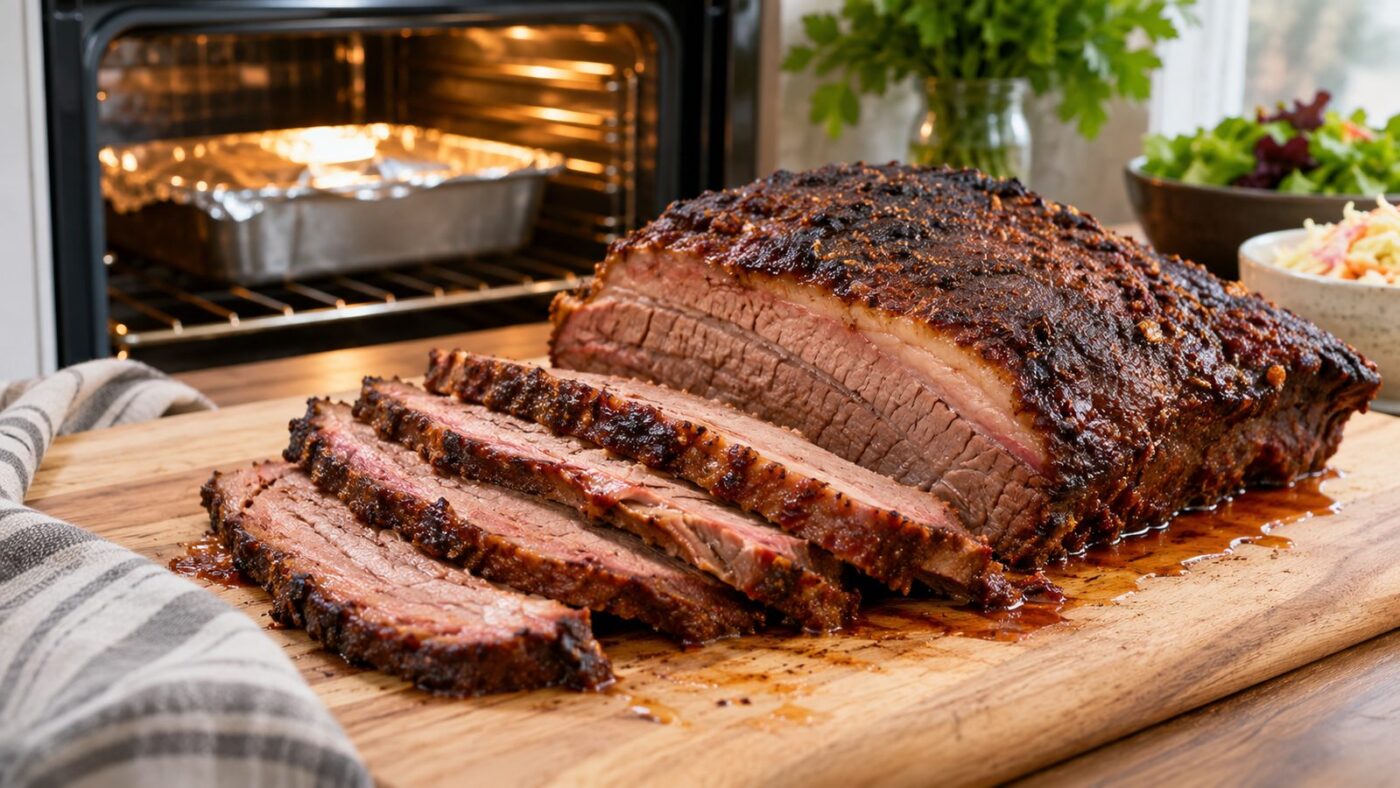
Learning how to cook brisket in oven gives you tender beef without needing a smoker or outdoor grill. The key is steady heat, a tight wrap, and enough cooking time for the connective tissue to soften. You should judge doneness by temperature and tenderness rather than the clock alone. To cook brisket in the oven, season the beef, place it in a covered roasting pan, and bake slowly until tender. Many recipes use 275–300°F and estimate 60–75 minutes per pound. Wrap tightly, cook until the thickest part reaches roughly 195–205°F, then rest before slicing across the grain.
Oven Brisket at a Glance
| Detail | Recommendation |
|---|---|
| Typical cut | 4–6 lb brisket flat or small whole cut |
| Common low-and-slow oven range | 275–300°F |
| Approximate cooking time | 60–75 minutes per lb |
| Tenderness range | Roughly 195–205°F internal |
| USDA minimum for beef roasts | 145°F plus at least a 3-minute rest |
| Rest after slow cooking | 30–60 minutes |
| Refrigerator storage | 3–4 days at 40°F or below |
| Best slicing method | Slice across the grain |
There is one important safety distinction before you start. Many popular oven recipes use 275–300°F, including recipes that cook the meat tightly covered. USDA FSIS, however, advises setting a conventional oven no lower than 325°F for food-safety reasons. The recipe below explains the common 275–300°F technique that many home cooks use. That temperature range differs from the USDA conventional-oven recommendation of at least 325°F. If you want to follow USDA oven guidance strictly, use at least 325°F and rely on your thermometer rather than fixed cooking times.
What You’ll Need
For a straightforward home version, choose a flat cut that fits comfortably inside your roasting pan. A 4–6 lb piece is easier to manage than a full packer cut. Leave some exterior fat because it helps protect the meat during the long cook.
Ingredients
- 1 beef brisket, about 4–6 lb
- 2 tablespoons kosher salt
- 1½ tablespoons coarse black pepper
- 1 tablespoon garlic powder
- 1 tablespoon onion powder
- 1 tablespoon smoked paprika
- 1 cup beef broth or water
- 1 tablespoon Worcestershire sauce, optional
- Aluminum foil or a tight-fitting roasting-pan lid
Equipment
- Large roasting pan or Dutch oven
- Heavy-duty aluminum foil
- Instant-read or leave-in meat thermometer
- Cutting board
- Sharp slicing knife
A thermometer matters more than an exact cooking schedule. Two pieces with the same weight can finish at different times because thickness and fat content vary. Your oven’s temperature accuracy can also change the total cooking time.
How to Cook Brisket in Oven Step by Step
1. Trim and season the meat
Pat the beef dry with paper towels before adding the seasoning. Trim thick, hard areas of exterior fat while leaving a thinner protective layer. Combine the salt, pepper, garlic powder, onion powder, and paprika before coating every side. For deeper seasoning, you can refrigerate the seasoned cut overnight. Keep it covered or placed on a suitable tray inside the refrigerator. If time is limited, you can cook it soon after seasoning.
2. Prepare the roasting pan
Place the seasoned meat fat-side up in a roasting pan. Pour about 1 cup of beef broth or water around it rather than directly over the seasoning. Add Worcestershire sauce to the liquid if you want a deeper savory flavor. Cover the pan tightly with heavy-duty foil or its fitted lid. A tight seal limits moisture loss during the long cooking period. It also creates a humid cooking environment that helps soften the tough cut.
3. Cook low and slow
Many oven methods use 275–300°F for slow cooking. At those temperatures, plan for roughly 60–75 minutes per pound as an estimate. A 5 lb piece could therefore need about five to six hours or longer. Treat that calculation as a planning tool rather than a guaranteed finish time. Shape, thickness, starting temperature, and oven performance can move the schedule. Begin checking the thickest section before the estimated finish time.
4. Keep it wrapped as it becomes tender
Keep the roasting pan covered for most or all of the cooking period. Foil helps limit evaporation and reduces the risk of dry edges. If the wrapping develops a hole, reseal it with another sheet. Some cooks unwrap near the end to darken the exterior. That step is optional because uncovered cooking increases moisture loss. A covered finish is simpler when tenderness and moisture matter more than a firm bark.
5. Check temperature and tenderness
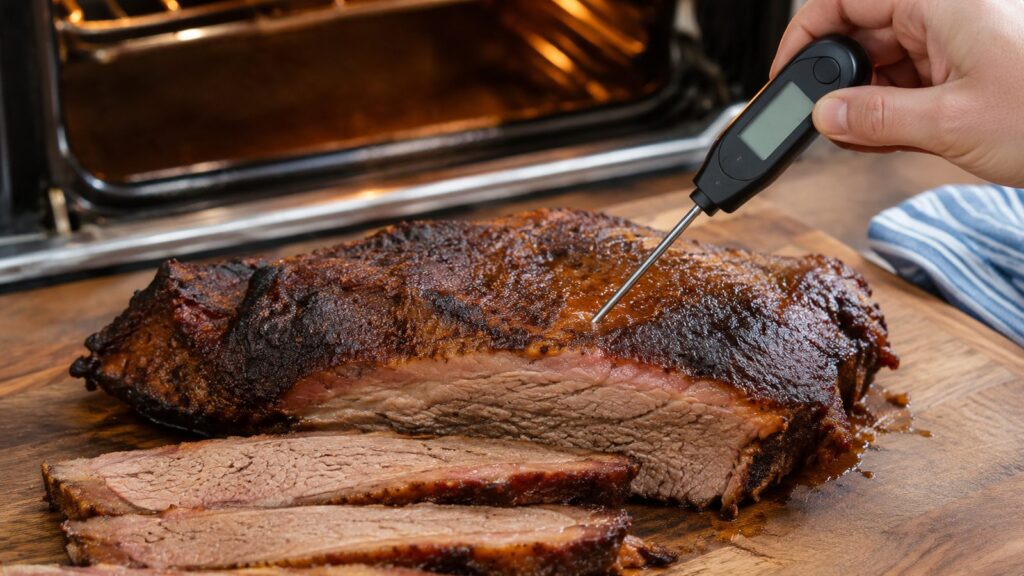
For classic slow-cooked texture, start checking tenderness as the internal temperature approaches 195°F. Many pieces become tender somewhere around 195–205°F. The thermometer probe should enter the thickest area with little resistance. That tenderness temperature is much higher than the minimum temperature needed for beef safety. USDA recommends at least 145°F for beef roasts followed by a minimum three-minute rest. Slow-cooked brisket goes higher because collagen needs additional heat and time to soften.
6. Rest before slicing
Remove the pan from the oven when the meat feels tender. Keep it wrapped and let it rest for about 30–60 minutes. The resting period also makes the meat easier to handle and slice. Do not rush directly from the oven to the cutting board. Immediate slicing releases more hot juices onto the board. A proper rest produces cleaner slices and a better eating texture.
7. Slice against the grain
Look closely at the direction of the muscle fibers before cutting. Slice across those fibers rather than following them. Aim for slices around ¼ inch thick for an easy-to-eat serving size. The flat usually has a clear grain direction. A whole cut may contain muscles whose grain runs in different directions. Rotate the meat as needed so each section is sliced across its grain.
How Long Does Brisket Take in the Oven?
At 275–300°F, an approximate range of 60–75 minutes per pound is useful for meal planning. That means a 4 lb cut might take around four to five hours. A 6 lb piece may need roughly six to seven and a half hours.
| Weight | Approximate Time at 275–300°F |
|---|---|
| 3 lb | 3–4 hours |
| 4 lb | 4–5 hours |
| 5 lb | 5–6¼ hours |
| 6 lb | 6–7½ hours |
| 8 lb | 8–10 hours |
These figures are estimates rather than finish-time guarantees. Current oven recipes commonly show about one hour per pound at 300°F, while lower-temperature methods can run closer to 75 minutes per pound. The final decision should come from tenderness and internal temperature, not elapsed time alone.
What Temperature Should Brisket Reach?
The two temperatures people discuss have different purposes. 145°F plus a three-minute rest is USDA’s minimum temperature guidance for whole beef roasts. A slow-cooked cut usually needs substantially more heat before it develops the soft texture most people expect. For tenderness, roughly 195–205°F is a practical target range. Start probing near the lower end instead of automatically waiting for 205°F. Remove the meat when the probe slides into the thickest section with minimal resistance. Temperature alone cannot tell you exactly how much collagen has softened. One piece might feel ready at 198°F, while another remains firm above 200°F. Combining thermometer readings with a probe-tender test gives you a better result.
How to Keep Oven Brisket From Drying Out
A tight wrap is one of the simplest ways to limit moisture loss. Keep liquid in the bottom of the pan and avoid opening the foil repeatedly. Each unnecessary opening releases heat and steam. You should also avoid cooking strictly by a time chart. A thinner flat can finish sooner than a thick piece of equal weight. Continuing to cook after the meat is already tender can dry the leaner sections. Resting matters after cooking as well. Keep the cut wrapped while it rests instead of exposing the entire surface to room air. Slice only the amount you plan to serve right away. For other food and wellness reading, NewsPab also covers food choices and diet topics. You can browse the site’s broader Lifestyle section and Health section for related practical guides.
Storing and Reheating Leftovers
Place leftovers in shallow, covered containers once they have cooled enough for safe refrigeration. USDA recommends keeping cooked beef refrigerated at 40°F or below for 3–4 days. Freeze portions you will not use within that period. Keep some cooking juices with the sliced meat before refrigerating it. Those juices help protect the slices from drying during reheating. Store larger servings in separate containers so you only reheat what you need. For leftovers, USDA recommends reheating cooked food to at least 165°F. Cover the meat while reheating and add a small amount of broth or reserved juice. Gentle reheating preserves texture better than repeatedly heating and cooling the entire batch.
Common Mistakes to Avoid
- Treating minutes per pound as an exact finish time
- Slicing before the resting period ends
- Cutting with the grain instead of across it
- Leaving the roasting pan poorly sealed
- Checking the oven every 20–30 minutes
- Removing the meat at 145°F and expecting traditional tender texture
- Continuing to cook after the meat already feels probe-tender
- Forgetting that USDA advises conventional ovens be set at least 325°F
The biggest mistake is relying on only one measurement. Weight helps estimate your schedule, while internal temperature narrows the doneness window. Probe tenderness tells you when the connective tissue has softened enough.
Frequently Asked Questions
How to cook brisket in oven without drying it out?
Keep the roasting pan tightly covered and add about 1 cup of liquid around the meat. Cook until the thickest area becomes probe-tender rather than following time alone. Rest the cooked beef while it is still wrapped before slicing.
Should I cook it covered or uncovered?
Covered cooking is the more forgiving choice for a home oven. The foil traps moisture and protects lean areas during a long cooking period. You can uncover near the end if you prefer a darker exterior.
How long should I cook it per pound?
At 275–300°F, use roughly 60–75 minutes per pound as a planning range. Do not remove the meat solely because that estimated time has passed. Keep cooking until the internal temperature and tenderness indicate it is ready.
Is 145°F enough for beef?
USDA states that whole beef roasts should reach at least 145°F and rest for three minutes. That temperature addresses minimum food-safety guidance rather than classic slow-cooked texture. Brisket commonly reaches roughly 195–205°F before becoming tender enough for easy slicing.
How long can cooked brisket stay in the refrigerator?
USDA recommends using refrigerated cooked beef within 3–4 days. Keep your refrigerator at 40°F or below and store leftovers in covered containers. Freeze extra portions if you will not eat them within that period.
The Best Way to Plan Your Cook
Give yourself more cooking time than your weight estimate suggests. If the meat finishes early, a wrapped rest is easier to manage than delaying dinner for a tough cut. Check tenderness near the end and let the beef, rather than the clock, determine when cooking stops. For the familiar low-and-slow approach, 275–300°F, a tight wrap, roughly 60–75 minutes per pound, and a 195–205°F tenderness range provide a practical framework. Remember that USDA advises conventional ovens be set at least 325°F, despite lower settings appearing in many recipes. Whichever method you follow, use a food thermometer, allow a proper rest, and slice across the grain. —