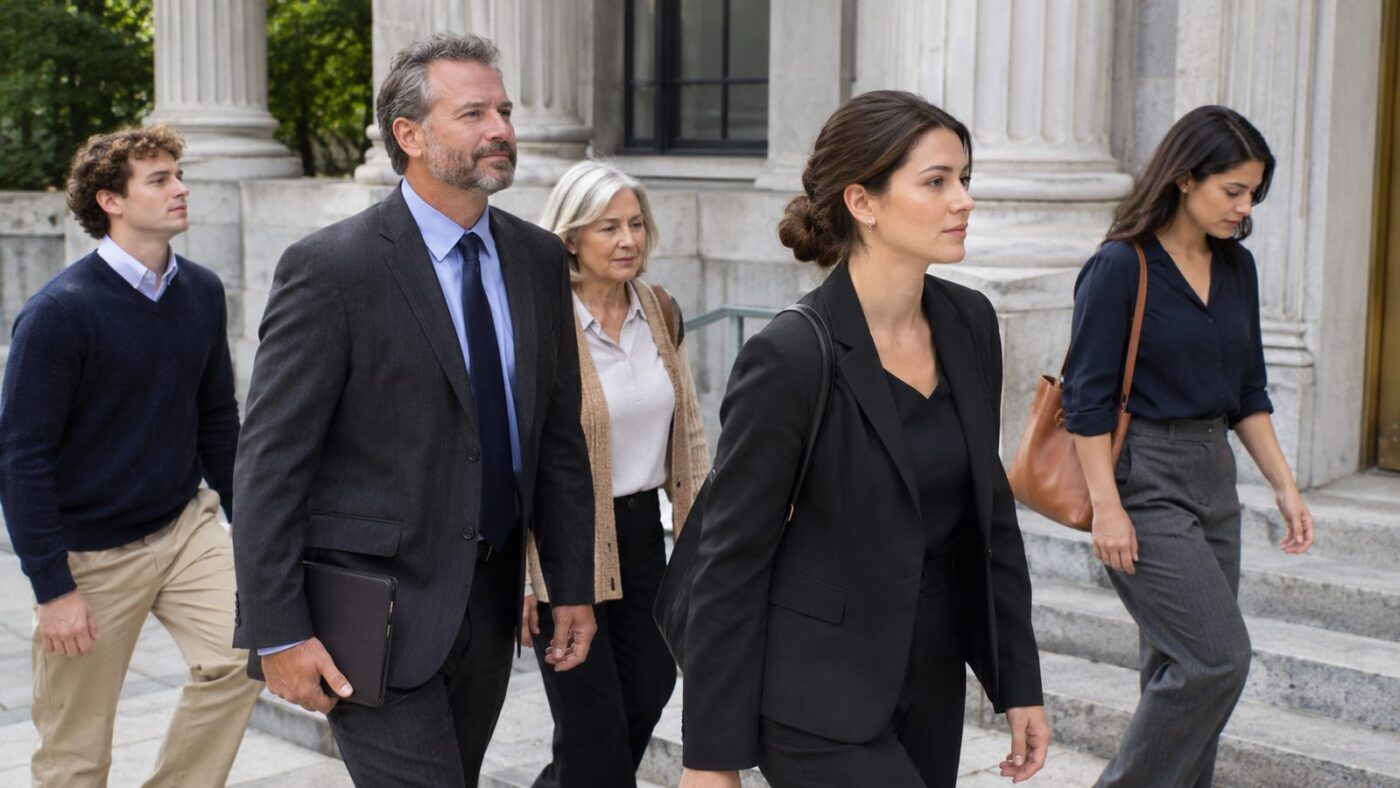
Choosing court outfits does not require an expensive suit or a brand-new wardrobe. Aim for clean, neat, modest clothing that resembles traditional office or interview wear. Your specific courthouse may publish different requirements, so check its official website before your appearance. Direct answer: Wear clean, pressed, understated clothes that fit well and let you sit, stand, and walk comfortably. A collared shirt, blouse, sweater, slacks, modest skirt, or simple dress can work. Choose closed shoes when possible, limit distracting graphics, and bring a light layer. Always confirm local courthouse rules first.
| Situation | A safe starting point | Budget-friendly version | Extra consideration |
|---|---|---|---|
| Defendant | Suit or neat business attire | Dark pants, plain collared shirt or blouse, clean closed shoes | Ask your lawyer if you have one |
| Witness | Quiet business or business-casual clothing | Slacks or modest skirt with a plain top | Avoid anything distracting while testifying |
| Juror | Comfortable business casual | Chinos, slacks, sweater, blouse, or polo | Bring a layer for a cool courtroom |
| Family member or observer | Neat, understated clothing | Dark pants with a plain shirt or sweater | Follow visitor rules for that courthouse |
| Any gender | Simple, well-fitting separates | Thrifted, borrowed, or already-owned basics | Fit and cleanliness matter more than price |
Check Your Local Court Before Choosing Clothes
There is no single dress rule that covers every courthouse in the United States. Federal, state, county, and municipal courts can publish their own expectations. Individual courtrooms may also handle attire differently, so local guidance should control your choice. This is why checking first matters. Some courts encourage business casual, while others simply ask for respectful appearance. Several also list examples of clothing they consider unsuitable. Some courts describe the courtroom as a formal environment and warn that inappropriate clothing can lead to being asked to leave. Treat that as a reason to check, not as a nationwide rule. Search your courthouse name with terms such as “dress code” or “what to expect.” Check your summons, hearing notice, or official court website as well. If you have a lawyer, ask whether they recommend anything specific for your appearance.
Court Outfits by Role: Defendant, Witness, Juror, or Family Member
Your role changes how formal you may want to dress. A defendant or witness may prefer the more polished end of business attire. A juror or family member can focus more on neatness, comfort, and local requirements.
What to Wear as a Defendant
If you are a defendant, choose clothing that looks serious without becoming a costume. A navy, charcoal, brown, or black suit can work if you already own one. You can also wear dress pants with a collared shirt, blouse, cardigan, or simple jacket. Do not assume you must buy a suit for one hearing. Well-fitting dark pants and a clean solid top can look polished on a limited budget. NewsPab’s guide to custom suit fit explains useful fit and comfort points. Keep colors and patterns quiet unless your local rules say otherwise. Choose items that stay comfortable while you sit for long periods. If you have counsel, follow their clothing advice over general fashion guidance.
What to Wear as a Witness
A witness usually benefits from simple clothing that keeps attention on the testimony. Try pressed trousers with a blouse, button-down shirt, knit top, or modest sweater. A plain dress or skirt with a cardigan can also work. Choose shoes that let you walk and stand comfortably. Avoid accessories that make noise or require frequent adjustment. Neat grooming and comfortable layers can help you focus on questions rather than your clothing. Neat, clean, comfortable clothing is a sensible general approach. Courtroom temperatures can vary, so a sweater or jacket is practical. That advice is general, so confirm the rules for the courthouse you will enter.
What to Wear for Jury Duty
Jurors should prioritize respectful clothing and all-day comfort. Some courts encourage business casual. Many also suggest bringing a sweater or light jacket because courtrooms can feel cool. A simple option is chinos or slacks with a collared shirt, blouse, sweater, or cardigan. A modest skirt or dress can also work if it remains comfortable while seated. Comfortable closed shoes are practical for security lines and walking through the building. Jeans are one area where local guidance can differ. Some courts discuss them specifically, while others do not. Check your jury summons and official juror page before relying on denim.
What to Wear as a Family Member or Observer
Family members and observers should dress for a serious professional appointment. Dark pants, a plain top, a sweater, or a simple dress are easy choices. You do not need to match the defendant or wear formal business clothing. Avoid clothing that draws attention away from the proceeding. Loud slogans, oversized graphics, beachwear, and overly casual pieces are poor default choices. Still, your local court’s published visitor rules should guide the final decision. A modest outfit can also be built from items you already use elsewhere. NewsPab’s modest outfit ideas may help with simple skirts, blouses, flats, and layers. The setting is different, so use those ideas only for wardrobe inspiration.
Gender-Inclusive Outfit Ideas
Courtroom clothing does not need to follow rigid gender categories. Focus on fit, coverage, neatness, and understated styling instead. Pick combinations that feel authentic while still fitting the formality of the setting. For a more traditionally masculine look, try dark slacks, a button-down shirt, and loafers. Add a blazer, cardigan, or simple tie if you already own one. A clean polo with chinos can also be a lower-cost option where local rules allow it. For a more traditionally feminine look, try trousers with a blouse and cardigan. A knee-length or midi skirt with a simple top is another option. A modest dress with flats can work when it feels comfortable and appropriate. For a gender-neutral look, combine straight-leg trousers with a plain knit or collared shirt. Add an unstructured blazer, cardigan, or overshirt for a polished layer. Loafers, simple boots, or clean closed shoes can finish the outfit.
Budget-Friendly Ways to Dress for Court
Start with your closet before spending money. Clean, pressed, well-fitting basics often matter more than labels or price. A simple outfit can look polished when every piece fits and is in good condition. Build around one pair of dark pants or a modest skirt. Add a plain shirt, blouse, polo, or sweater in a neutral color. Use a cardigan or jacket you already own instead of buying formal outerwear. Thrift stores can be useful for blazers, trousers, belts, and simple dresses. Borrowing from a relative or friend can also solve a one-day wardrobe gap. Try everything on early so you can fix fit problems before the hearing. Shoes should be clean, stable, and comfortable enough for waiting and walking. NewsPab’s shoe and style guide discusses comfort and wardrobe fit. You can also browse the site’s fashion section for broader clothing ideas.

What to Avoid as a General Starting Point
Official court pages often discourage highly casual or distracting clothing. Common examples include shorts, tank tops, flip-flops, and clothing with offensive slogans. These are recurring examples, not a universal nationwide ban. Also avoid anything that makes sitting, standing, or passing security unnecessarily difficult. Excess metal jewelry can slow screening at some federal courthouses. Some juror pages specifically suggest leaving excess metal at home. Religious dress and required accommodations should not be treated as fashion problems. Official rules can include exceptions or separate procedures. Check the courthouse website or contact the clerk if you need guidance about an accommodation.
A Simple Night-Before Checklist
- Check the official courthouse website for attire rules.
- Read your summons, subpoena, or hearing notice again.
- Choose clean, pressed clothing with a comfortable fit.
- Set out a light sweater, cardigan, or jacket.
- Pick shoes suitable for walking, waiting, and standing.
- Remove unnecessary metal accessories before security.
- Pack required identification and court documents separately.
- Ask your lawyer about attire if you are represented.
Preparing the night before reduces last-minute choices. It also gives you time to replace a stained, wrinkled, or uncomfortable item. Your goal is to arrive focused on the proceeding rather than your wardrobe.
Frequently Asked Questions About Court Clothing
What are the safest court outfits if I am unsure?
Start with business casual clothing in quiet colors. Think slacks, a collared shirt, blouse, sweater, modest skirt, or simple dress. Then check the official courthouse website because local requirements can differ.
Do I need to wear a suit?
A suit is not universally required for every person entering an American courthouse. Many official juror pages recommend business casual or respectful attire instead. Your role, local rules, and lawyer’s advice should guide the final choice.
Can I wear jeans?
There is no national answer that applies to every courthouse. Some courts address jeans directly, while others focus on general neatness. Check your own court’s website before choosing denim.
What should I wear if I cannot afford formal clothes?
Use the cleanest, best-fitting basics you already own. Borrowing, thrifting, and simple neutral separates can create a respectful outfit for little money. Expensive brands are not necessary for a neat appearance.
Should family members dress formally too?
Family members should usually aim for neat, understated clothing. They can often wear simple business-casual pieces rather than a full suit. The courthouse’s visitor rules still control what is acceptable.
What if my court has a different dress code?
Follow the court’s official instructions rather than a general article. Check the courthouse website, your notice, or information from the clerk. If you have a lawyer, ask them about any courtroom-specific expectations.
Choose Respectful, Comfortable Clothing and Verify the Rules
The safest approach is simple: wear clean, understated clothing similar to traditional office wear. Use pieces you already own, borrow, or thrift if your budget is limited. Comfort matters because courthouse visits can involve long periods of sitting and waiting. Most importantly, verify the rules for the exact courthouse handling your matter. Dress requirements vary, and this article does not replace official instructions. It also provides general clothing information only and is not legal advice. —